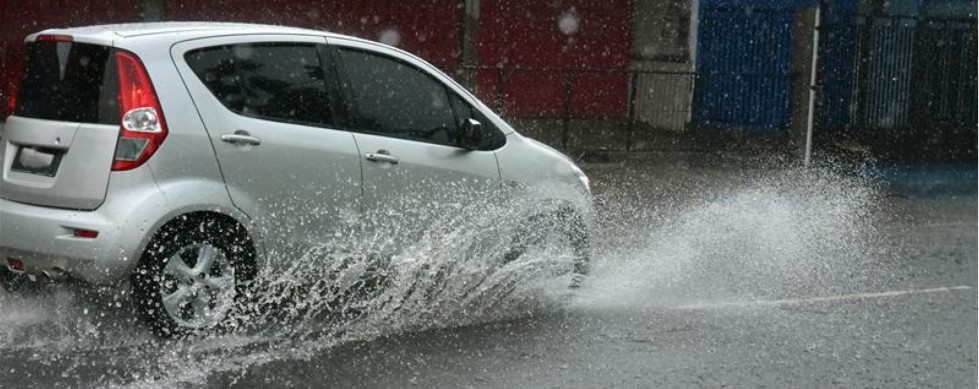
Rethinking 50mm/hr: Is It Still Enough for Surface Water Design?
Article written by Darryl Haigh, Regional Specification Manager at ACO.
Since 2006, I’ve been designing channel drainage systems, often using the widely accepted benchmark of 50mm/hr rainfall intensity — a figure rooted in the legacy of BS EN 752. It’s served as a reliable starting point for many years, helping Engineers and Contractors deliver surface water solutions across the UK.
But as our climate shifts and infrastructure ages, it’s time to ask: is 50mm/hr still enough?
We wouldn’t design our attenuation devices and wider network to 50mm/hr, so why the channels which collect and convey the run-off? Is it because they typically sit outside of the drainage model in the design stage? But what about the reality when everything is connected together….
But as our climate shifts and infrastructure ages, it’s time to ask: is 50mm/hr still enough?
We wouldn’t design our attenuation devices and wider network to 50mm/hr, so why the channels which collect and convey the run-off? Is it because they typically sit outside of the drainage model in the design stage? But what about the reality when everything is connected together….
Why We Need to Reassess
While 50mm/hr remains a reasonable baseline when compared to actual rainfall events, it doesn’t always reflect today’s challenges:
- Climate change is driving more intense and unpredictable rainfall events.
- Lack of maintenance activities are reducing the capacity of systems.
- The wider drainage networks that these channels connect to are typically designed for 1-in-30-year return periods (and checked against 1:100 year plus climate change), but how does the water get to them if less severe rainfall parameters are used on upstream collection systems?
Designing solely to 50mm/hr risks underestimating the real-world demands placed on surface water infrastructure — especially in urban or high-risk areas.
This is reinforced by the latest version of the National standards for sustainable drainage systems (SuDS) which was updated in July this year, which states:
“The surface water drainage system shall be designed so that, unless an area is designated to hold or convey water as part of the design, flooding does not occur on any part of the development for rainfall events up to the 3.3% AEP event.”
That’s equivalent to a 1-in-30-year event, and recent UK rainfall data shows just how critical this shift is:
- The State of the UK Climate 2024 report confirms that six of the ten wettest years since 1862 have occurred since 1998, with rainfall events exceeding 50mm becoming more frequent. [www.metoffice.gov.uk]
- In the 18 months leading up to March 2024, England recorded 1,695.9mm of rain — the highest ever for any 18-month period since records began in 1836. [news.sky.com]
- The Met Office also notes that short-duration, high-intensity rainfall events are becoming more common, especially in warmer months, due to the atmosphere’s increased capacity to hold moisture.
Our Recommendation: Design to the 1-in-30-Year Event (15-Minute Duration)
To ensure surface water systems are robust and future-proof, we recommend that you:
- Design to a 1-in-30-year return period with a 15-minute duration, which better reflects network capacity and real-world rainfall events.
- Consider exceedance flows and how systems behave when rainfall exceeds design thresholds. Build in resilience for the unexpected.
- Factor in climate change and urban creep as applicable.
- Collaborate early with manufacturers and drainage specialists to ensure compatibility and long-term performance.
- Promote proactive maintenance to clients to preserve system integrity over time.
Let’s Talk — Test Your Design’s Resilience with Quad
Our Quad software allows you to test the resilience of your design and assess exceedance flows outside of the main drainage model — giving you a clearer picture of how your system will perform in the real world. We also provide bespoke links for Flow and conduits for InfoDrainage to allow designers to see the full picture within their drainage models including all ACO products.
Feel free to reach out to me directly (DHaigh@aco.co.uk) to discuss your current approach and to arrange a demo of Quad and our bespoke link / conduits.
Author: Darryl Haigh : Regional Specification Manager
Contact Details: DHaigh@aco.co.uk